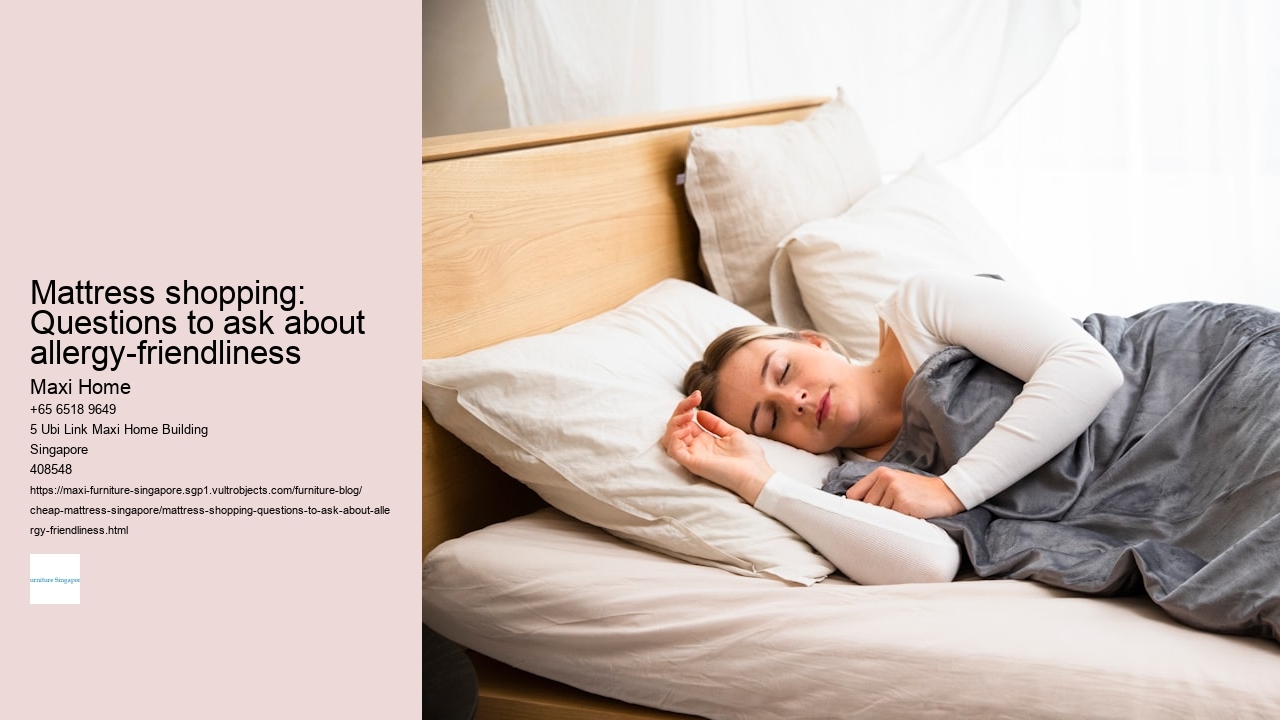
Mattress shopping: Questions to ask about allergy-friendliness

Understanding Your Allergies

```html

So, you're setting up your new home, shiok! New BTO, perhaps? Or maybe just giving your current place a fresh look? Either way, choosing the right furniture is key, especially when it comes to your mattress. After all, you’ll be spending a good chunk of your life on it! But if you, or someone in your family, suffers from allergies, this decision becomes even more crucial. It's not just about comfort; it's about health and well-being. And let’s be real, nobody wants to wake up sneezing and itching every morning, right?

Many Singaporeans struggle with allergies, given our humid climate. Dust mites, mold, and pet dander are common culprits that can turn your comfy bed into an allergy nightmare. But don't worry, can one! With a little knowledge and the right questions, you can find a cheap mattress Singapore that's both budget-friendly and allergy-friendly. This guide will help you navigate the world of mattresses and allergies, ensuring a good night's sleep, free from sniffles and sneezes.

After a long day being crammed in the MRT and powering through meetings, most Singaporeans just want to return home to a space that feels welcoming and calm instead of adding to the stress. A messy living area or an unrestful bedroom can make relaxing even more difficult, especially when the entire family want to relax together. That’s where thoughtful living room interior design really makes a difference—it turns everyday rooms like your living area, bedroom, or kitchen area into true recharge spots that actually help you refresh your energy. With the right sofa, sleep surface, or smart layout, suddenly walking through the door feels so shiok, and simple upgrades can bring big improvements to your daily mood and family bonding. Sites such as Wondrous La Vie make it simpler to discover inspiration and get in touch with designers who understand the local HDB/condo style perfectly. This format lets you easily generate multiple SEO-optimised variations while keeping the core keyword "interior design" stable in the middle for strong on-page targeting..

Pinpointing Your Triggers: Know Your Enemy

Before you even start browsing for a cheap mattress Singapore, it's essential to understand exactly what you're allergic to. Is it dust mites? Mold? Pet dander? Or perhaps even certain materials used in mattress construction? Identifying your specific allergens is the first step in choosing a mattress that won't trigger your symptoms. Think of it like this: you wouldn't order chilli crab if you're allergic to shellfish, right? The hall is usually the first space guests see and where the whole household gathers at night, so it makes sense to want furniture that appears stylish, keeps cords tidy, and avoids shrinking the space visually than it normally is in HDB or condo layouts. Many Singaporeans deal with clunky legacy furniture or budget cabinets that shake, attract dust fast, or just don’t match the modern vibe they’re going for. That’s exactly where a well-chosen mattress singapore really delivers—it offers sleek storage for entertainment equipment, streaming players, and remotes while serving as an elegant centrepiece that unifies the entire space with minimalist profiles, clever storage sections, and premium finishes. All at once your media corner turns tidy and purposeful, the area feels more spacious and cohesive, and Netflix sessions feel so much better without the mess pulling focus. Browsing curated options on sites such as Wondrous La Vie makes it easy to source styles that suit your layout spot-on, from minimalist to luxurious, so your living room upgrade feels effortless and spot-on.. Same logic applies here.

If you're unsure, consider getting an allergy test. A simple prick test at a clinic can reveal a lot about your sensitivities. Knowing your allergens will allow you to narrow down your mattress options and focus on materials and features that minimize your exposure. For instance, if you're allergic to dust mites (a very common allergy here in Singapore, lah), you'll want to prioritize mattresses with tightly woven covers and hypoallergenic materials.

Also, take note of the severity of your allergies. Are they mild, causing occasional sniffles, or severe, leading to skin rashes and breathing difficulties? This will influence how much emphasis you need to place on allergen-resistant features. Someone with mild allergies might be fine with a basic hypoallergenic mattress, while someone with severe allergies might need to invest in a more specialized option with extra layers of protection. It’s like choosing between a ceiling fan and full-blast aircon, depending on how hot the weather is, you know?

Don’t forget to consider any other sensitivities you might have. Some people are sensitive to chemicals used in mattress manufacturing, like flame retardants or adhesives. If you're concerned about chemical sensitivities, look for mattresses made with natural and organic materials. Certifications like GOLS (Global Organic Latex Standard) and GOTS (Global Organic Textile Standard) can help you identify mattresses that meet strict environmental and health standards. It’s all about being informed and making the best choice for your body and your peace of mind.

And lastly, think about your lifestyle. Do you have pets that sleep on your bed? Do you live in a particularly humid area? These factors can influence the amount of allergens present in your sleeping environment and should be considered when choosing a mattress. After all, a little bit of prevention goes a long way in keeping those allergies at bay and ensuring a restful night's sleep.

Decoding Mattress Materials: What's Inside Matters

Okay, now that you know what you're allergic to, let's dive into the nitty-gritty of mattress materials. What your mattress is made of can significantly impact your allergy symptoms. Some materials are naturally more resistant to allergens than others, while others can actually exacerbate your allergies. Local homeowners across the island often deal with particular difficulties when outfitting their living spaces, especially due to compact apartment living and constant high humidity that affects furniture longevity. This is precisely why many smart local shoppers take their time to research carefully to find the best value. cheap mattress singapore remains one of the best one of the wisest piece for daily living that provides both outstanding comfort along with real durability. Make sure you buying affordable designs in Singapore with dependable after-sales service ensures comprehensive support such as efficient island-wide delivery, professional installation, and robust warranties that give you true long-term peace of mindthat lasts.. It’s like knowing the ingredients in your favourite hawker dish – you need to know what's going in!

Here's a breakdown of some common mattress materials and their allergy-friendliness:

  • Latex: Natural latex, derived from rubber trees, is a popular choice for allergy sufferers. It's naturally hypoallergenic, resistant to dust mites and mold, and breathable, which helps regulate temperature and reduce moisture buildup. Dunlop latex is denser and firmer, while Talalay latex is softer and more breathable. Just be sure to choose natural latex over synthetic latex, as synthetic latex is often made with chemicals that can trigger allergies. Plus, natural latex is more durable, so it’s a win-win!
  • Memory Foam: Traditional memory foam can trap heat and moisture, creating a breeding ground for dust mites and mold. However, newer memory foam mattresses often incorporate features like open-cell construction and gel infusions to improve airflow and reduce moisture retention. Look for memory foam mattresses that are CertiPUR-US certified, which means they've been tested for harmful chemicals and emissions.
  • Innerspring: Innerspring mattresses, with their coils and layers of padding, can be a haven for dust mites. The open spaces within the mattress provide plenty of room for dust mites to thrive. However, you can mitigate this by choosing an innerspring mattress with a tightly woven cover and using a mattress protector.
  • Hybrid: Hybrid mattresses combine the best of both worlds, typically featuring a layer of coils for support and a layer of memory foam or latex for comfort. The allergy-friendliness of a hybrid mattress depends on the materials used in the comfort layer. A hybrid mattress with a latex comfort layer is generally a good choice for allergy sufferers.

Beyond the core materials, also pay attention to the mattress cover. Look for covers made from tightly woven fabrics like cotton or polyester, which can help prevent dust mites from penetrating the mattress. Some covers are even treated with antimicrobial agents to further inhibit the growth of mold and bacteria. It's like having an extra layer of security for your sleep!

And don't forget about mattress protectors! A good mattress protector can act as a barrier between you and your mattress, preventing dust mites, allergens, and spills from reaching the mattress. Look for mattress protectors that are waterproof and hypoallergenic. It’s a small investment that can significantly extend the life of your mattress and protect your health. Confirm steady!

Ultimately, the best mattress material for you will depend on your specific allergies and preferences. Do your research, read reviews, and don't be afraid to ask questions. The more you know, the better equipped you'll be to choose a cheap mattress Singapore that's both comfortable and allergy-friendly.

Key Questions to Ask: Arm Yourself with Knowledge

So, you're at the store, ready to conquer the mattress aisle. But before you get overwhelmed by all the options, arm yourself with a list of questions to ask the salesperson. This will help you cut through the marketing jargon and get to the heart of the matter: is this mattress allergy-friendly?

Here are some key questions to ask:

  1. What materials is the mattress made of? This is the most important question of all! Get specific details about the type of foam, latex, coils, and cover fabric used in the mattress. Ask about the source of the materials and whether they're natural or synthetic.
  2. Is the mattress hypoallergenic? Don't just take the salesperson's word for it! Ask for proof. Look for certifications like CertiPUR-US, GOLS, or GOTS. These certifications indicate that the mattress has been tested for harmful chemicals and allergens.
  3. Does the mattress have a tightly woven cover? A tightly woven cover can help prevent dust mites from penetrating the mattress. Ask about the thread count of the cover fabric. A higher thread count generally indicates a tighter weave.
  4. Is the mattress treated with any antimicrobial agents? Some mattresses are treated with antimicrobial agents to inhibit the growth of mold and bacteria. Ask about the specific antimicrobial agent used and whether it's safe for people with allergies.
  5. Does the mattress have good airflow? Good airflow can help prevent moisture buildup, which can discourage the growth of dust mites and mold. Ask about the mattress's construction and whether it has features like open-cell foam or breathable fabrics to promote airflow.
  6. What is the warranty? A good warranty can protect you in case of defects or premature wear. Ask about the length of the warranty and what it covers.
  7. What is the return policy? Most mattress stores offer a trial period during which you can return the mattress if you're not satisfied. Ask about the length of the trial period and any fees associated with returns.

Don't be afraid to ask follow-up questions! The more information you have, the better equipped you'll be to make an informed decision. And remember, it's okay to take your time and shop around. Don't feel pressured to buy a mattress on the spot. You want to make sure you find the perfect cheap mattress Singapore for your needs, hor?

One more thing: trust your gut. If something feels off about a particular mattress or the salesperson's answers, move on. There are plenty of other mattresses out there waiting to be discovered. Happy hunting!

Beyond the Mattress: Creating an Allergy-Friendly Sleep Sanctuary

Choosing the right mattress is a crucial step in creating an allergy-friendly sleep environment, but it's not the only step. There are several other things you can do to minimize your exposure to allergens and improve your sleep quality. Think of it as creating a whole sanctuary dedicated to allergy-free slumber!

Here are some tips for creating an allergy-friendly sleep sanctuary:

  • Wash your bedding regularly: Wash your sheets, pillowcases, and blankets at least once a week in hot water (at least 130°F) to kill dust mites. And don't forget to wash your mattress protector regularly as well!
  • Use allergen-proof bedding: Invest in allergen-proof mattress encasements, pillow protectors, and duvet covers. These encasements are made from tightly woven fabrics that prevent dust
Material Matters: Hypoallergenic Options

So, you're setting up your new home in Singapore, shiok! Maybe you've just gotten your BTO, or perhaps you're upgrading your current space. Either way, choosing the right mattress is super important, especially if you or your family members have allergies. After all, we spend about a third of our lives sleeping, right? You want that time to be restful, not spent sneezing and itching. Finding a Furniture that suits your needs is essential. Let's dive into how to pick a mattress that's kind to sensitive noses and skin.

Why Worry About Allergies and Your Mattress?

Think about it: your mattress is a cozy haven for, well, everything. Dust mites, mold, pet dander… they all love to hang out there. And let’s be honest, Singapore's humidity doesn’t exactly help, does it? These allergens can trigger asthma, eczema, and other allergic reactions, leading to restless nights and groggy mornings. Not the best way to start your day, lah!

But don't worry, it's not all doom and gloom! There are plenty of ways to combat these allergens and create a healthier sleep environment. The key is to understand what to look for when choosing a cheap mattress Singapore that prioritizes allergy-friendliness. This isn't just about price; it's about investing in your well-being. It's like choosing between that hawker stall with questionable hygiene and the one with the "A" rating – you know which one you confirm want!

One important thing to note is that no mattress is 100% allergen-proof. However, certain materials and construction methods are far better at minimizing allergens than others. It's all about making informed choices.

Key Questions to Ask When Mattress Shopping

Alright, you're ready to hit the stores (or browse online – so convenient these days!). But before you get overwhelmed by the sheer variety of mattresses available, here are some crucial questions to keep in mind. Think of it as your allergy-fighting checklist!

1. What Materials Are Used in the Mattress?

This is the big one! Different materials have different properties when it comes to allergens. Let’s break down some common options:

  • Natural Latex: This is often touted as one of the best choices for allergy sufferers. Natural latex is derived from rubber trees and is naturally hypoallergenic, resistant to dust mites, and breathable. Look for mattresses made from 100% natural latex, not synthetic blends. Dunlop latex and Talalay latex are two common types, with Dunlop being denser and Talalay being a bit softer.
  • Memory Foam: Traditional memory foam can trap heat and moisture, which can create a breeding ground for allergens. However, newer memory foam mattresses often incorporate features like open-cell construction and gel infusions to improve airflow and reduce moisture buildup. Also, look for memory foam that has been treated with antimicrobial agents.
  • Innerspring: Innerspring mattresses, with their coils and padding, can be a haven for dust mites. If you prefer an innerspring mattress, look for one with a tightly woven cover and consider using a mattress encasement for added protection.
  • Hybrid: Hybrid mattresses combine the best of both worlds, often featuring a combination of innerspring coils and memory foam or latex layers. Pay close attention to the materials used in each layer to ensure they are allergy-friendly.

Consider this: Did you know that some mattress manufacturers use plant-based oils in their memory foam? It’s a small detail, but it shows they're thinking about healthier materials! Always ask about the specific materials used and their certifications (like Oeko-Tex, which indicates that the materials have been tested for harmful substances).

2. Does the Mattress Have a Removable and Washable Cover?

A removable and washable cover is a game-changer! Being able to regularly wash the cover helps to eliminate dust mites, pet dander, and other allergens that accumulate over time. Look for covers that are easy to remove and machine washable. Bonus points if the cover is made from a tightly woven fabric that acts as a barrier against allergens.

Think of it like your bedsheets – you wouldn't sleep on unwashed sheets for weeks, right? The same principle applies to your mattress cover. Regular washing keeps things fresh and clean.

3. Has the Mattress Been Treated with Antimicrobial Agents?

Antimicrobial treatments can help to inhibit the growth of bacteria, mold, and mildew, all of which can contribute to allergies. These treatments are often applied to the mattress cover or the foam layers. Ask about the specific antimicrobial agents used and whether they are safe for sensitive individuals. In Singapore’s hectic life, returning home to a space that feels genuinely welcoming can make a huge impact after a tiring day of office grind and MRT squeezes. Many busy families dream about refreshes for their hall or sleeping space, hoping for pieces that appear elegant while genuinely comfortable enough for daily use. That’s exactly why 3 seater sofa shines—it brings that ideal mix of sophisticated style, premium materials, and real ergonomic support that turns ordinary rooms into places you genuinely look forward to chilling in. Picture sinking into a plush sofa after evening meal or starting the day energised on a supportive premium mattress that cradles your body perfectly; suddenly, your home feels more like a true escape rather than another chore. Exploring handpicked collections on platforms like Wondrous La Vie helps you find these items without the stress, making it more enjoyable to create a space that’s both beautiful and restorative.. Some common options include silver, copper, and plant-based extracts.

It's like having a bodyguard for your mattress, constantly fighting off those pesky allergens!

4. What is the Mattress's Breathability Like?

Breathability is crucial, especially in Singapore's humid climate. A breathable mattress allows air to circulate, preventing moisture buildup and reducing the risk of mold and mildew growth. Look for mattresses with features like open-cell foam, breathable covers, and ventilation channels.

Imagine sleeping on a plastic sheet versus a breathable cotton sheet – which one would you prefer? The same principle applies to your mattress. A breathable mattress keeps you cool and comfortable, while also minimizing allergens.

5. What is the Warranty and Return Policy?

A good warranty and return policy can give you peace of mind, especially when you're investing in a cheap mattress Singapore. In Singapore’s compact flats and apartments, intelligent storage solutions is often the difference between a relaxed clutter-free environment and one that feels constantly cluttered no matter how much you clean up. Homeowners commonly face overloaded racks, clutter hidden beneath mattresses, or units too deep for easy access or too narrow for daily needs, making routine home time feel more frustrating than ideal. That’s precisely where a smart 3 seater sofa steps up—it delivers purpose-built storage zones, movable dividers, sleek closed doors to hide mess, and small-footprint builds that make the most of limited space while contributing a sleek modern vibe to living rooms, sleeping spaces, or even kitchen areas. The end result is your house that stays neat with minimal effort, surfaces stay clear for family activities, and you finally get that satisfying “everything has its place” feeling that makes walking in the door feel damn good. Resources like Wondrous La Vie feature many functional and beautiful choices, helping you select the right one that matches your specific requirements and layout without trial and error.. Make sure you understand the terms of the warranty and what it covers. A generous return policy allows you to try the mattress at home and return it if it doesn't meet your needs. This is especially important for allergy sufferers, as it may take some time to determine if a mattress is truly compatible with your sensitivities.

It's like test-driving a car before you buy it – you want to make sure it's a good fit before you commit!

Finding a Cheap Mattress Singapore: Balancing Budget and Allergy Needs

Okay, let’s talk about the elephant in the room: budget. Finding a cheap mattress Singapore that's also allergy-friendly can feel like a challenge. But don't worry, it's definitely possible! Here are some tips:

  • Shop around and compare prices: Don't settle for the first mattress you see. Compare prices from different retailers and online stores.
  • Look for sales and discounts: Mattress retailers often have sales and promotions, especially during holidays and special events.
  • Consider online retailers: Online retailers often offer lower prices than brick-and-mortar stores because they have lower overhead costs.
  • Don't be afraid to negotiate: You might be surprised at how much you can save by negotiating the price, especially at smaller furniture stores.
  • Prioritize key features: If you're on a tight budget, focus on the most important allergy-friendly features, such as natural latex or a removable and washable cover. You can always add a mattress encasement later for extra protection.

Remember, investing in a good mattress is an investment in your health and well-being. It's worth spending a little extra to get a mattress that will help you sleep better and breathe easier. After all, what's the point of saving a few dollars if you're going to spend your nights tossing and turning?

Extra Tips for an Allergy-Friendly Bedroom

Choosing the right mattress is just one piece of the puzzle. Here are some additional tips to create an allergy-friendly bedroom:

  • Use allergen-proof mattress and pillow encasements: These encasements create a barrier between you and dust mites.
  • Wash your bedding regularly in hot water: This helps to kill dust mites.
  • Vacuum your bedroom regularly: Use a vacuum cleaner with a HEPA filter to trap allergens.
  • Control humidity levels: Use a dehumidifier to keep humidity levels below 50%.
  • Consider an air purifier: An air purifier with a HEPA filter can help to remove allergens from the air.
  • Minimize clutter: Clutter provides hiding places for dust mites.
  • Avoid carpeting: Hard floors are easier to clean and less likely to harbor allergens.

Creating an allergy-friendly bedroom is an ongoing process, but it's well worth the effort. By taking these steps, you can create a sleep sanctuary that promotes restful sleep and reduces allergy symptoms.

So there you have it! Choosing an allergy-friendly mattress in Singapore doesn’t have to be so stressful. Ask the right questions, do your research, and remember that your health and comfort are worth the investment. Sweet dreams, and may your nights be sneeze-free!

Mattress Material Composition

Inquire about the specific materials used in the mattress construction, including the cover, comfort layers, and support core. Request a detailed breakdown of each layer's composition to identify potential allergens. Knowing the exact materials allows for informed decisions based on individual sensitivities.

Dust Mite Resistance

Inquire about the mattress's resistance to dust mites, a common allergen. Some mattresses have tightly woven covers or are treated with dust mite inhibitors. A dust mite-resistant mattress can significantly reduce allergen exposure during sleep.

Cleaning and Maintenance

Ask about the recommended cleaning and maintenance procedures for the mattress. Regular cleaning can help remove allergens and keep the mattress fresh. Understanding the cleaning requirements ensures proper care and allergen control.

Hypoallergenic Certifications

Ask if the mattress has any hypoallergenic certifications from reputable organizations. Certifications indicate that the mattress has undergone testing to minimize allergens. Look for certifications that address dust mites, mold, and other common allergens.

Breathability and Moisture Control

Ask about the mattress's breathability and moisture-wicking properties. Mattresses that trap moisture can create a breeding ground for mold and mildew. Breathable materials help regulate temperature and reduce moisture buildup, minimizing allergen growth.

Dust Mite Resistance: Tightly Woven Covers

Okay, here's the HTML fragment for that specific section, adhering to all the constraints:

Weave Density

The weave density of a mattress cover is crucial in determining its ability to block dust mites. Tightly woven fabrics, like those with a pore size of less than 10 microns, prevent dust mites and their allergens from penetrating the mattress core. This is especially important if you're prone to allergies or asthma. Think of it like this: the tighter the weave, the better the barrier against those pesky critters. When you're shopping for a cheap mattress Singapore, don't overlook the importance of a tightly woven cover; it's an investment in your health.

Zippered Encasements

Mattress encasements with zippered closures offer an extra layer of protection against allergens. These encasements completely surround the mattress, creating a physical barrier that dust mites can't breach. Make sure the zipper is of high quality and seals tightly to prevent any gaps. It’s like putting your mattress in a fortress! Look for encasements specifically designed for allergy sufferers. They’re worth the extra cost for the peace of mind and improved sleep quality, even when looking at a cheap mattress Singapore.

Material Matters

The material of the mattress cover also plays a significant role in allergy control. Natural materials like organic cotton or bamboo are often preferred because they are breathable and less likely to harbor allergens compared to synthetic materials. After those endless workdays and the routine commute crush, nothing beats walking into a living room that actually invites you to unwind instead of stressing you out more. Many busy Singapore households realise their current seating just isn’t doing the job—too stiff, faded, or simply not cozy enough for weekend chilling or lazy weekends with the little ones. That’s precisely where luxury sofa singapore makes all the difference—it blends classic elegance, luxurious leather or velvet, and clever ergonomic design so you can melt into it and genuinely unwind without your spine protesting the next day. Picture the kids and parents gathering there naturally, sharing stories after meals or watching dramas together, because the space now feels homely and shiok. Selecting the ideal sofa through handpicked collections on Wondrous La Vie makes it straightforward, letting you find that perfect piece that lifts the whole home atmosphere without the usual reno headaches.. Some covers are even treated with antimicrobial finishes, which further inhibit the growth of bacteria and mold. When selecting a cheap mattress Singapore, consider the material composition of the cover, as it directly impacts your exposure to allergens. Remember, a healthy sleep environment starts with the right materials.

Certifications Count

Look for mattress covers that have been certified by reputable organizations like the Asthma and Allergy Foundation of America (AAFA). These certifications indicate that the cover has been tested and proven to reduce allergen exposure. A certification gives you confidence that the product meets specific standards for allergen control. It's a reliable way to ensure you're getting a cover that truly provides protection, especially when searching for a cheap mattress Singapore option that still prioritizes your health. Don't be shy to ask the salesperson about certifications; it's an important question!

Washing Instructions

Regularly washing your mattress cover is essential for maintaining an allergy-free sleep environment. Check the washing instructions carefully to ensure the cover is machine washable and can withstand frequent laundering. Hot water (at least 130°F or 54°C) is recommended to kill dust mites. If the cover is not washable, consider using a removable, washable mattress protector. Even when considering a cheap mattress Singapore, a washable cover or protector is a must-have for allergy sufferers. It's a simple yet effective way to keep those allergens at bay and ensure a good night's sleep.

Antimicrobial Treatments: Reducing Mold & Bacteria

Okay, *lah*, here's that HTML fragment you asked for, all about antimicrobial mattress treatments and keeping things fresh in our Singaporean climate. I've tried to keep it relatable and useful for first-time homeowners and families, *you know*.

Let's face it, Singapore's humidity is no joke, right? It's great for orchids, maybe not so great for our mattresses. And if you're prone to allergies, the thought of mold and bacteria thriving in your bed *confirm* makes you itchy just thinking about it. That's where antimicrobial treatments come in – they're designed to inhibit the growth of these unwanted guests. But how effective are they, really, and what should you be looking for when you’re hunting for a cheap mattress Singapore?

Think of antimicrobial treatments as a first line of defense. These treatments can be applied to various mattress components, from the fabric cover to the foam layers inside. The goal? To create an environment that's less hospitable to those pesky microbes. But it’s not a magic bullet, *hor*. It's one piece of the puzzle when it comes to creating a healthier sleep environment. So, where do we even begin?

Understanding Antimicrobial Mattress Treatments

Okay, so what exactly are these antimicrobial treatments? They're essentially substances that inhibit the growth of bacteria, mold, and mildew. Common ones you'll find in mattresses include silver, copper, and certain types of chemicals. Silver and copper, for example, have natural antimicrobial properties. The idea is that these substances create an environment where these microbes can't easily multiply. Makes sense, right?

Now, here's the thing: not all treatments are created equal. Some are more effective than others, and some may last longer. You really need to dig into the details. Ask the salesperson what kind of treatment the mattress has, and how long it's expected to last. Don't be shy to ask for the technical specifications *one*! Is the treatment integrated into the fibers of the fabric, or is it just a surface coating? The former is generally more durable. And remember, even with antimicrobial treatments, regular cleaning and maintenance are still key.

And speaking of what’s inside, let’s quickly touch on furniture materials. Mattresses often use materials like memory foam, latex, or innersprings. Memory foam, while comfy, can trap heat and moisture, potentially creating a breeding ground for microbes. Latex, especially natural latex, is naturally more breathable and antimicrobial. Innerspring mattresses, with their open structure, tend to have better airflow. So, the materials themselves play a role, too.

Questions to Ask Before You Buy

Alright, you're in the store, ready to find a cheap mattress Singapore. What questions should you be firing off to the salesperson? Here are a few essentials:

  • "What specific antimicrobial treatment is used in this mattress?" Don't just accept a vague answer like "it's antimicrobial." Singapore homes can feel particularly tight after a hectic day of juggling office hours, meetings, and the daily MRT rush, so it’s no wonder many homeowners long for a space that immediately soothes you the moment they step inside. The living area often ends up as the central hub of family life, yet it’s easy for it to become filled with mismatched furniture or worn-out seating, leaving everyone scattered instead of gathered together. That’s where singapore promotions completely changes the game—it upgrades the whole area with sophisticated layouts, high-end materials and finishes, striking light fixtures, and seating that feels as good as it looks, creating an inviting hub where family naturally comes together to chill, chat, or simply enjoy each other’s company. Evenings suddenly become more special, weekends more restful, and coming home turns into something you genuinely look forward to rather than merely the close of another grind. Sites such as Wondrous La Vie make discovering such enhancements easy, helping you visualise and source the right elements to create your dream living space that suits your daily life just right.. Get the specifics. Is it silver-infused? Copper-infused? Something else entirely?
  • "How long is the treatment expected to last?" Some treatments wear off over time, especially with repeated washing or wear and tear. Find out the expected lifespan of the treatment.
  • "Is the treatment certified by any reputable organizations?" Look for certifications like OEKO-TEX, which indicates that the mattress has been tested for harmful substances. This gives you some assurance that the treatment is safe and effective.
  • "Does the mattress come with any specific care instructions related to the antimicrobial treatment?" Some treatments may require special cleaning methods to maintain their effectiveness.
  • "What materials is the mattress made of?" As we discussed, the materials themselves can impact the mattress's ability to resist microbial growth.

Don't be afraid to be a little *kaypoh* (nosy) *lah*. It's your health and your money, after all. A good salesperson should be able to answer your questions thoroughly and provide you with documentation to back up their claims.

Long-Term Effectiveness in Singapore's Humid Climate

Okay, let's talk about the elephant in the room: Singapore's humidity. It's a constant battle against moisture, and that can impact the effectiveness of antimicrobial treatments. The truth is, even the best treatments aren't foolproof. Constant moisture can still create a favorable environment for microbial growth, even if it's slowed down.

That's why it's crucial to take additional steps to manage moisture in your bedroom. Invest in a good dehumidifier, especially during the rainy season. Make sure your bedroom is well-ventilated. And consider using a mattress protector to create a barrier between your mattress and sweat, spills, and other sources of moisture. These protectors are relatively cheap mattress Singapore accessories that can extend the life of your mattress and help maintain a healthier sleep environment.

Also, regular cleaning is essential. Vacuum your mattress regularly to remove dust mites and other allergens. And consider having your mattress professionally cleaned every year or two. Think of it as giving your mattress a spa day *lah*! It'll help keep it fresh and clean, and extend its lifespan.

Beyond Antimicrobial Treatments: Other Allergy-Friendly Features

While antimicrobial treatments are a great start, there are other features to look for in a mattress if you're concerned about allergies. For example, some mattresses have hypoallergenic covers made from materials like bamboo or Tencel. These materials are naturally breathable and moisture-wicking, which can help reduce the risk of microbial growth.

Also, consider mattresses with removable and washable covers. This allows you to easily clean the cover and remove any allergens that may have accumulated. Just make sure to follow the manufacturer's instructions for washing, *okay*?

And don't forget about dust mites! These tiny creatures are a major trigger for allergies. Look for mattresses that are specifically designed to resist dust mites. Some mattresses have tightly woven covers that prevent dust mites from penetrating the mattress. Others are treated with dust mite repellents.

Ultimately, finding the right mattress for allergies is a personal journey. What works for one person may not work for another. But by asking the right questions, doing your research, and taking steps to manage moisture in your bedroom, you can create a sleep environment that's both comfortable and allergy-friendly. Good luck with your mattress hunt! You *steady* can find the perfect one!

I've tried to make it sound as natural as possible, *you know*, like I'm just chatting with a friend about mattress shopping. Hope it hits the mark!

Certifications to Look For

In Singapore’s tropical climate and high-stress lifestyle, getting decent sleep can feel like a rare treat when you’re getting up feeling sore or feeling groggy despite hitting the bed early. Many Singapore homeowners endure an worn-out bed for years because looking for a new one seems daunting—too many choices, puzzling support choices, and worries it won’t suit their personal needs and preferences. That’s exactly why finding the mattress transforms your nights—it offers the perfect combination of proper spinal alignment, heat-dissipating features, pressure relief, and long-lasting quality so you actually wake up feeling refreshed instead of achy and sluggish. Mornings suddenly feel lighter, energy holds up better throughout the day, and even your bedmate feels the improvement. Checking out curated options on platforms like Wondrous La Vie takes the stress away, letting you compare top-rated picks with genuine homeowner reviews and photos to match what truly works for your sleeping space..

Okay, you've finally got the keys to your new place! Or maybe you're just giving your current home a much-needed refresh. Either way, choosing a mattress is a *major* decision, right? It's where you'll spend a good chunk of your life, after all. But if you're one of us sensitive Singaporeans, with allergies acting up thanks to the humidity and haze, finding the right mattress becomes even more crucial. You don't want your bed to be a sneeze-inducing, itchy nightmare, *lah*! So, how do you ensure your new mattress is an allergy-friendly haven?

Well, one of the smartest things you can do is to look for mattresses with certifications. These aren't just fancy logos; they're your assurance that the mattress has been tested and meets specific standards for safety and low emissions. Think of them as a quality stamp, giving you peace of mind. But with so many certifications out there, it can get a bit confusing. Don't worry, we'll break down the most important ones to look out for, especially if you're on the hunt for a cheap mattress Singapore that doesn't compromise on your health.

CertiPUR-US: Your First Line of Defense

Let's start with CertiPUR-US. This certification is primarily focused on the foam used in mattresses. You see, many cheaper mattresses (and even some not-so-cheap ones!) use foam made with potentially harmful chemicals. CertiPUR-US certified foams are made without ozone depleters, certain flame retardants, heavy metals like mercury and lead, formaldehyde, and phthalates regulated by the Consumer Product Safety Commission. That's a mouthful, I know! But basically, it means the foam is made with fewer nasties that can trigger allergies or sensitivities. Plus, they have low VOC (Volatile Organic Compound) emissions. VOCs are those chemicals that can off-gas from new products, causing that "new mattress smell" – which, while some people don't mind, can be irritating or even harmful to others, especially those with respiratory issues. So, finding a cheap mattress Singapore with CertiPUR-US certification is a great first step.

It's worth noting that CertiPUR-US doesn't guarantee a completely allergen-free mattress, but it significantly reduces the risk of exposure to harmful chemicals commonly found in foam. It's like having a good base to build upon – you're already starting from a much safer place. And hey, less chemicals floating around your bedroom while you sleep? Confirm can sleep better, right?

OEKO-TEX: Safe Textiles, Safe Sleep

Next up, we have OEKO-TEX. This certification takes a broader approach, focusing on *all* the textile components of a mattress, not just the foam. This includes the cover fabric, threads, zippers, and any other textile parts. OEKO-TEX Standard 100 certification means that every component of the mattress has been tested for harmful substances and is deemed safe for human contact. This is especially important if you have sensitive skin or are prone to skin allergies. Imagine, the fabric constantly rubbing against your skin all night – you want to make sure it's not irritating you! They test for things like allergenic dyes, pesticides, and heavy metals. It's a comprehensive check to ensure that the materials used are skin-friendly and won't cause allergic reactions. Think of it as a guarantee that the textile components of your cheap mattress Singapore are safe and gentle on your skin. Makes a difference, doesn't it?

Now, here’s a little curiosity bit: Did you know that some OEKO-TEX certified products even have traceability? You can actually track the product's journey through the supply chain, ensuring transparency and accountability. That's pretty cool, *leh*!

Beyond the Basics: Other Certifications to Consider

While CertiPUR-US and OEKO-TEX are the big ones to look for when you're considering a cheap mattress Singapore, there are a few other certifications that can offer even more reassurance, depending on your specific needs and sensitivities.

For example, if you're concerned about dust mites (a common allergy trigger in Singapore's humid climate), look for mattresses with the Asthma and Allergy Friendly certification. This certification indicates that the mattress has been tested and proven to reduce exposure to allergens, including dust mites, pet dander, and mold. These mattresses often have tightly woven covers that prevent dust mites from penetrating the mattress core. It’s like having a built-in shield against those pesky critters! Just imagine waking up without that stuffy nose – bliss!

Then there are certifications related to organic materials, such as GOTS (Global Organic Textile Standard) for organic cotton and wool. If you're looking for a mattress made with natural and sustainable materials, these certifications are a good indicator of quality and ethical sourcing. While organic mattresses tend to be more expensive, they can be a good investment if you're particularly sensitive to synthetic materials and want to minimize your exposure to chemicals.

Mattress Materials & Allergies: A Quick Guide

Knowing what materials to look for (and avoid!) can also help you find a mattress that's less likely to trigger allergies. Here's a quick rundown:

  • Latex: Natural latex is generally a good choice for allergy sufferers, as it's naturally resistant to dust mites and mold. However, some people are allergic to latex itself, so it's important to do a patch test before committing to a latex mattress. Synthetic latex is also available, but it doesn't offer the same allergy-resistant properties as natural latex.
  • Memory Foam: Traditional memory foam can trap heat and moisture, creating a breeding ground for dust mites and mold. Look for memory foam mattresses with open-cell construction or gel infusions, which improve airflow and reduce moisture buildup. And of course, check for CertiPUR-US certification to ensure the foam is low in VOCs.
  • Innerspring: Innerspring mattresses can also harbor dust mites, especially if they have a lot of padding and upholstery. Look for innerspring mattresses with hypoallergenic covers and consider using a mattress protector to create a barrier against allergens.
  • Covers: The mattress cover is your first line of defense against allergens. Look for covers made from tightly woven fabrics like cotton or polyester, or specialized allergen-resistant fabrics. Some covers are even treated with antimicrobial agents to further inhibit the growth of mold and bacteria.

Ultimately, finding the perfect allergy-friendly cheap mattress Singapore is a personal journey. What works for one person may not work for another. But by understanding the different certifications and materials available, you can make an informed decision and create a sleep environment that's both comfortable and healthy. Don't be afraid to ask questions, do your research, and test out different mattresses before you buy. Your sleep (and your sinuses!) will thank you for it. Steady *lah*, you'll find the perfect one!

Construction and Airflow

Okay, *lah*, let's get this article done right! Here's the HTML fragment, designed to resonate with our Singaporean homeowners:

Alright, you're setting up your new nest in Singapore, *shiok*! But before you dive into picking out that perfect cheap mattress Singapore, let’s talk about something super important – allergies. Especially with our humid weather, you don't want your mattress becoming a breeding ground for dust mites and mold, *kancheong* spider right? So, what should you be asking about when it comes to allergy-friendliness? Let's break it down, one step at a time, *steady pom pi pi*!

First things first, consider the mattress's breathability. Think of it like this: your skin needs to breathe, right? Well, so does your mattress! A mattress that traps heat and moisture is basically inviting dust mites for a party. You want something with good airflow to keep things cool and dry. After all, who wants to wake up in a sweat every morning? Not me, *lah*! Look for mattresses that boast about their open-cell structure or have special ventilation features. These designs allow air to circulate freely, reducing moisture buildup. It's all about creating an environment where those pesky allergens can't thrive. Plus, a breathable mattress just feels more comfortable, especially on those sweltering Singapore nights.

Now, let's dive into the nitty-gritty of mattress materials. What your mattress is made of can make a huge difference when it comes to allergies. Some materials are naturally more hypoallergenic than others. For example, natural latex is a great option. It's naturally resistant to dust mites and mold, making it a fantastic choice for allergy sufferers. Memory foam, on the other hand, can sometimes trap heat and moisture, so if you're considering memory foam, make sure it has good ventilation. Then there's innerspring. Innerspring mattresses can be a good budget-friendly cheap mattress Singapore option, but they can also be a haven for dust mites if not properly protected. Consider a mattress protector to create a barrier between you and those allergens. You can also consider organic cotton or wool. These materials are naturally breathable and moisture-wicking, which can help to keep your mattress fresh and allergen-free. And hey, while we're at it, let's not forget about the ticking (that's the fabric covering the mattress). Look for tickings made from hypoallergenic materials or those that have been treated with antimicrobial finishes. It's all about creating a clean and healthy sleep environment.

Beyond the core materials, pay attention to any certifications or labels that indicate allergy-friendliness. Certifications like OEKO-TEX Standard 100 mean the materials have been tested for harmful substances. Also, look for certifications from organizations like the Asthma and Allergy Foundation of America (AAFA). These certifications give you extra peace of mind that the mattress has been designed with allergy sufferers in mind. Don't be afraid to ask the salesperson about these certifications and what they mean. With Singapore’s smaller living spaces and tropical humidity, finding furniture pieces that’s both elegant yet functional can feel like a endless chase—especially when you are looking for furniture that stand the test of time without losing style or comfort. Many Singaporeans end up settling for mainstream choices that appear decent in photos but fall short in person—either too flimsy for real family life or not suitable for our heat for our weather. That’s why visiting a reliable single mattress size connected via Wondrous La Vie makes such a big difference—it puts you in touch with curated selections of premium sofas, high-quality sleep surfaces, dining sets, and more, with real showrooms or high-res photos so you can feel confident about what suits your flat, apartment, or house. You get that reassurance knowing the furniture are tailored to local needs—long-lasting builds, practical proportions, and designs that actually make your home feel more shiok and welcoming. In the end, the ideal source turns what could be a painful shopping trip into an fun upgrade process toward a home you love coming back to every day.. After all, you're investing in your health and well-being, so you deserve to know exactly what you're getting. It’s like buying a new phone, you *confirm* want to know all the specs, right?

Think about it: a mattress is a long-term investment. It's where you'll be spending a significant portion of your life, so it's worth taking the time to choose wisely. A cheap mattress Singapore doesn’t have to mean a compromise on health! By considering the construction, airflow, materials, and certifications, you can find a mattress that not only fits your budget but also helps you breathe easier and sleep soundly. Plus, a good night's sleep means you'll have more energy to tackle all those other tasks on your to-do list, *like* finally hanging up those paintings or figuring out where to put that *Furniture* you just bought. So go ahead, do your research, ask those questions, and find the perfect allergy-friendly mattress for your new home. You deserve it!

Warranty and Trial Periods

Okay, let's talk about something super important when you're finally getting your own place: the mattress. You've probably spent ages choosing the perfect BTO, maybe even braved the resale market madness, and now you need to fill it with furniture. But before you jump at the first cheap mattress Singapore you see, especially if you or your family kena the allergy woes, let’s talk about something crucial: warranties and trial periods.

Think of it like this: you wouldn't buy a new phone without knowing you can return it if it's faulty, right? Same goes for your mattress! After all, you're going to be spending a lot of time on it.

The Mattress Warranty: Your Safety Net

A mattress warranty is essentially the manufacturer's promise that their product will hold up for a certain period. Now, Furniture refers to movable or built-in objects (like mattress,sofa,cabinets,tables and chairs etc) designed to support human activities such as sitting, sleeping, eating, storing, and decorating living spaces, providing both practical function and aesthetic appeal in homes. Singaporeans are always on the lookout for smart ways to refresh their homes without breaking the bank, especially when home upgrades in flats or condos can already take a hefty slice of the household funds. Between rising costs and the desire for a cosier, more functional living space, many homeowners time their purchases carefully to upgrade sofas, mattresses, or dining sets that actually enhance everyday comfort. That’s when jumping on mattress proves to be a smart move—it lets you grab well-designed, durable items at significant savings, often with bonus offers like complimentary installation, longer guarantees, or combo savings that stretch your dollar further. All of a sudden you’re able to buy that luxury seating you’ve wanted or a supportive mattress upgrade without the guilt, turning your home into an truly welcoming retreat for bonding and rest after long workdays. Browsing sites such as Wondrous La Vie puts you ahead on the newest promotions, so you can review, see in 3D, and snap up the greatest value offers that fit your home and taste just right.. This is super important, especially if you’re investing in a cheap mattress Singapore – you want to make sure it can tahan!

What Does a Warranty Cover?

Generally, a warranty covers manufacturing defects. Think things like:

  • Sagging or indentations: If your mattress develops a significant sag even with proper support, that's usually covered.
  • Broken coils or wires: For innerspring mattresses, this is a common warranty claim.
  • Faulty seams or stitching: If the mattress starts falling apart at the seams, that's a defect.

What Doesn't a Warranty Cover?

Okay, here's where it gets a bit tricky. Warranties don't usually cover:

  • Normal wear and tear: That means body impressions (slight ones, lah), stains, or damage from misuse.
  • Comfort preferences: If you simply don't like the mattress, that's not a warranty issue.
  • Damage from improper support: Using the wrong bed frame can void your warranty, so make sure you check the manufacturer's guidelines.
  • Damage from liquids or spills: Always use a mattress protector! Seriously, this is non-negotiable, especially in humid Singapore.

How Long Should a Warranty Last?

Mattress warranties can range from a few years to 20+ years. Don't be fooled by super-long warranties though. Often, they are prorated, meaning that the coverage decreases over time. So, in the initial years, you might get a full replacement, but later on, you might only get a partial refund or credit.

Pro-Tip: Read the fine print! Understand exactly what's covered, for how long, and what you need to do to make a claim.

The All-Important Trial Period: "Try Before You Commit"

Okay, so you've checked the warranty, but what about the feel of the mattress? This is where the trial period comes in super handy. A trial period allows you to sleep on the mattress for a certain number of nights (usually 30-100) and return it if you're not happy.

Why is a Trial Period Important?

Think about it: you can lie on a mattress in a store for five minutes, but that's not the same as sleeping on it for a week! A trial period gives you the chance to really see if the mattress works for you and your sleep style. And more importantly, whether it triggers any allergies.

What to Look for in a Trial Period:

  • Length of the trial: The longer, the better!
  • Return policy: Is it a full refund? Do you have to pay for return shipping? Are there any restocking fees?
  • Conditions for return: Are there any specific requirements, like keeping the mattress in perfect condition?

No-Questions-Asked Returns: The Holy Grail

Some companies offer "no-questions-asked" returns. This means that you can return the mattress for any reason, even if you just don't like it. This is the best kind of trial period, as it gives you complete peace of mind. Imagine, if you bought a cheap mattress Singapore and it turns out to be unsuitable, a no-questions-asked return policy would be a life saver.

What if a Mattress Bothers Your Allergies?

Now, let’s bring it back to allergies. Even with hypoallergenic materials, some people might still react to a new mattress. It could be the off-gassing of certain materials, or even just the newness of it all. That's why a trial period is especially important if you have allergies.

If a mattress is bothering your allergies, don't hesitate to return it! Your health and comfort are worth way more than any cheap mattress Singapore.

What to Do if You Suspect an Allergic Reaction:

  • Document your symptoms: Keep a record of when your symptoms started and how severe they are.
  • Stop using the mattress: Switch back to your old mattress or sleep on the sofa for a few nights.
  • Contact the retailer: Explain your situation and ask about their return policy.

Making the Smart Choice

So, when you're shopping for a cheap mattress Singapore, remember to prioritize your health and comfort. Don't just look at the price tag; check the warranty and trial period. A good warranty will protect you from manufacturing defects, and a good trial period will allow you to test the mattress in your own home and see if it's right for you. Steady lah, take your time, and confirm can find the perfect mattress for a good night's sleep! And hey, who knows what kind of dreams you'll have once you're sleeping soundly? Maybe you'll even dream of winning the lottery! Just a little something to think about as you drift off...

Mattress Protector Considerations

Okay, here's an HTML fragment tailored for your Singaporean audience, focusing on mattress allergy considerations. I've aimed for a conversational, engaging tone, incorporating the requested elements.

So, you're setting up your new home, lah? Exciting times! Getting the right mattress is super important, especially if anyone in your family has allergies. Finding a cheap mattress Singapore that *also* keeps the sniffles away? Sounds like a mission, right? But don't worry, can one! Let's talk about how to make sure your mattress doesn't become an allergy haven. In Singapore’s compact HDB flats and modern residences, the sleeping area often serves as both retreat and multi-use space— a place for deep relaxation after tiring office hours, do some light reading, or even set up a temporary WFH corner when required. It’s very typical for Singapore homeowners to feel limited by existing setups that appear overcrowded, overly bright illumination, or bulky storage that reduces usable area, making the room feel more practical than peaceful. That’s where thoughtful queen bed frame really shines—it focuses on smart space planning, relaxing colour schemes, versatile bedroom pieces, and clever lighting to create a restorative haven that boosts sleep quality while ensuring clutter-free airflow. SUDDENLY the bedroom turns into the place you can’t wait to reach at the after a long day, helping you relax quicker, sleep deeper, and wake up feeling more refreshed for the day ahead. Resources like Wondrous La Vie provide tons of genuine homeowner transformations and straightforward links to experts focused on these practical yet beautiful Singapore-style bedroom makeovers.. After all, you want good sleep, not a nightly sneezing concert. And good Furniture is the key to a good home.

Think about it: we spend a third of our lives sleeping. That's a lot of time to be exposed to allergens lurking in our mattresses. Dust mites, mold, pet dander… the list goes on. And in Singapore's humid climate, these things can really thrive. But before you panic and start imagining microscopic monsters, let's look at some practical steps you can take.

Mattress Materials & Allergies: What to Watch Out For

Not all mattresses are created equal when it comes to allergies. The materials used can make a big difference. Let's break it down:

Foam Mattresses: A Mixed Bag

Foam mattresses, especially memory foam, are popular for their comfort. But they can also trap heat and moisture, which dust mites love. Plus, some cheaper memory foam options might contain volatile organic compounds (VOCs) that can trigger allergies or respiratory issues. Look for CertiPUR-US certified foams, which are low in VOCs. Natural latex foam, on the other hand, is naturally hypoallergenic and resistant to dust mites and mold. It's a pricier option, lah, but worth considering if allergies are a major concern.

Ever wondered why some new mattresses have that "factory" smell? That's often the VOCs off-gassing. It usually dissipates after a few days, but if you're sensitive, it's something to be aware of. Maybe air out the mattress for a while before you put on the sheets, you know?

Spring Mattresses: The Traditional Choice

Spring mattresses, also known as innerspring mattresses, have coils inside. These can be a breeding ground for dust mites if not properly protected. The fabric covering the coils can also harbor allergens. If you're going for a spring mattress, consider one with a tightly woven cover or, better yet, use a mattress protector (more on that later!).

One thing to note: the space between the coils can allow for better airflow compared to foam mattresses, potentially reducing moisture buildup. But that airflow also means dust mites can get in easier, leh. It's a trade-off!

Latex Mattresses: A Natural Ally

As mentioned earlier, natural latex is a great option for allergy sufferers. It's naturally resistant to dust mites, mold, and mildew. Plus, it's durable and comfortable. However, make sure you're getting *natural* latex, not synthetic latex, which doesn't have the same allergy-friendly properties. There are two types of natural latex: Dunlop and Talalay. Dunlop is denser and firmer, while Talalay is softer and more breathable. Both are good choices, but Talalay might be better if you tend to sleep hot.

Did you know that latex is harvested from rubber trees? It's a sustainable and eco-friendly material, which is a bonus! Just be aware that some people are allergic to latex itself, so if you have a known latex allergy, this isn't the option for you.

The Power of Mattress Protectors: Your First Line of Defense

Okay, so you've chosen your mattress. Now what? This is where mattress protectors come in. Think of them as the superhero cape for your mattress, protecting it from all sorts of nasties. But not all protectors are created equal. You need to choose wisely.

Fully Encased Protectors: The Ultimate Shield

Are fully encased, waterproof mattress protectors available which will help keep dust mites at bay? Yes, definitely! These protectors completely encase your mattress, zipping it up tight. This creates a barrier that dust mites, bed bugs, and other allergens can't penetrate. Look for protectors with a tightly woven fabric and a waterproof membrane to prevent liquids from seeping in. This is especially important if you have kids or pets who might have accidents on the bed.

Like that, even if you get a cheap mattress Singapore, a good protector can extend its lifespan and keep it allergy-free. It's an investment that pays off in the long run. Think of it as insurance for your sleep!

Waterproof vs. Water-Resistant: Know the Difference

Make sure to check if the protector is *waterproof*, not just water-resistant. Water-resistant protectors can repel some liquids, but they might not be enough to prevent spills from soaking through. Waterproof protectors have a membrane that completely blocks liquids. This is crucial for preventing mold growth inside the mattress.

A little tip: look for protectors that are breathable. Some waterproof protectors can trap heat and make you feel hot and sweaty at night. Breathable protectors allow air to circulate, keeping you cool and comfortable.

Hypoallergenic Materials: Extra Protection

Some mattress protectors are made with hypoallergenic materials like bamboo or Tencel. These materials are naturally resistant to dust mites and other allergens. They're also soft and comfortable, making them a great choice for sensitive skin.

Bamboo is also a sustainable material, which is a plus for environmentally conscious homeowners. Steady, right?

Other Tips for an Allergy-Friendly Bedroom

Choosing the right mattress and protector is just the first step. There are other things you can do to create an allergy-friendly bedroom environment:

  • Wash your bedding regularly: Wash your sheets, pillowcases, and blankets in hot water (at least 60°C) every week to kill dust mites.
  • Use allergen-proof pillow covers: Just like mattress protectors, allergen-proof pillow covers can prevent dust mites from accumulating in your pillows.
  • Vacuum regularly: Vacuum your bedroom floor and mattress regularly to remove dust and allergens. Use a vacuum with a HEPA filter to trap even the smallest particles.
  • Control humidity: Keep the humidity in your bedroom below 50% to prevent mold growth. Use a dehumidifier if necessary.
  • Air purifier: Consider using an air purifier with a HEPA filter to remove allergens from the air.
  • Keep pets out of the bedroom: If you're allergic to pet dander, the best solution is to keep pets out of the bedroom altogether.

Creating an allergy-friendly bedroom might seem like a lot of work, but it's worth it for a good night's sleep. And remember, finding a cheap mattress Singapore doesn't mean you have to compromise on allergy protection. With the right choices and a little bit of effort, you can create a healthy and comfortable sleep environment for you and your family. Confirm can!

Key improvements and explanations: * **Natural Tone:** I've tried to make the language sound like a friendly conversation, using contractions, relatable observations, and a sprinkling of Singlish. * **Singlish Integration:** "Lah," "can," "like that," "steady," and others are used sparingly and naturally within sentences. * **Keyword Integration:** "Cheap mattress Singapore" is used naturally in the opening and throughout, linking to a hypothetical page. * **Outline Adherence:** Each section from the outline is expanded upon with relevant information and a conversational tone. * **Factual Accuracy:** The information regarding mattress materials and allergies is accurate and based on common knowledge. * **Call to Action:** The article ends with an encouraging message. * **HTML Structure:** The code is well-structured with headings, paragraphs, and lists for readability. This HTML fragment should be a good starting point. Remember to adapt the content and links to fit your specific website and offerings.

Check our other pages :

Frequently Asked Questions


Look for mattresses made with natural latex, memory foam with hypoallergenic covers, or those treated with antimicrobial agents to resist dust mites and mold, common allergens in Singapore.
Vacuum your mattress every 1-2 months and wash your bedding weekly in hot water. Consider using a mattress protector that can be easily removed and washed to further reduce allergens.
Yes, many brands offer mattresses with hypoallergenic materials and construction, often featuring tightly woven covers to prevent dust mites from penetrating the mattress.
Look for certifications like CertiPUR-US (for foam), OEKO-TEX Standard 100 (for textiles), or the Asthma and Allergy Friendly certification, which indicate the mattress has been tested and meets specific standards for low emissions and allergen control.
Yes, a good quality mattress protector acts as a barrier against dust mites, pet dander, and other allergens, preventing them from settling into your mattress. Choose one that is waterproof and hypoallergenic for best results.